
- March 17, 2026
- PCB Assembly, PCB Blog
Why PCB Prototypes Fail the First Time – And How Engineers Can Prevent It

In electronics development, few things are more frustrating than a prototype PCB that fails the first time it is built. Engineers often spend weeks designing, simulating, and validating their circuits, only to discover that the physical board does not perform as expected once it reaches fabrication or assembly.
The truth is that most first-build prototype failures are not caused by circuit design errors. They are usually the result of design-for-manufacturing (DFM) issues that were never visible inside the CAD environment.
Understanding where these problems originate – and how to prevent them – can dramatically improve first-pass prototype success.
The Most Common DFM Issues Found During Fabrication
During prototype fabrication, manufacturers frequently uncover design details that violate real manufacturing limits. These issues may include:
- Trace widths and spacing that are too small for reliable etching
- Via structures that exceed aspect-ratio capabilities
- Annular rings that disappear during drilling tolerances
- Copper balancing issues that cause plating inconsistencies
None of these problems may be obvious during layout, especially when CAD tools allow designs that push theoretical limits. But when the board enters fabrication, the physical realities of drilling, plating, and imaging quickly appear.
This is why DFM review by an experienced fabricator is so important during the prototype stage.
CAD Assumptions vs. Manufacturing Reality
Modern PCB design tools are incredibly powerful, but they still rely on assumptions. Stackup definitions, impedance calculations, and routing rules are typically based on idealized material and process models.
In reality, fabrication processes include small variations in:
- Copper thickness
- Dielectric height
- Lamination pressure
- Etch compensation
These variations can slightly shift trace geometry or dielectric spacing, which in turn affects impedance and signal performance.
Without accounting for these real-world variables, a design that looks perfect in simulation may behave differently once it is manufactured.
The Hidden Role of Stackup Tolerances
One of the most overlooked contributors to prototype failure is stackup tolerance.
High-speed and RF designs often depend on precise dielectric spacing and copper thickness to achieve target impedance values. However, laminate materials and lamination processes introduce normal manufacturing tolerances.
A small change in dielectric thickness can shift impedance enough to impact signal integrity or RF performance. If these tolerances are not considered during design, the first prototype may fail electrical validation even though the fabrication process was technically correct.
Why Early Collaboration Matters
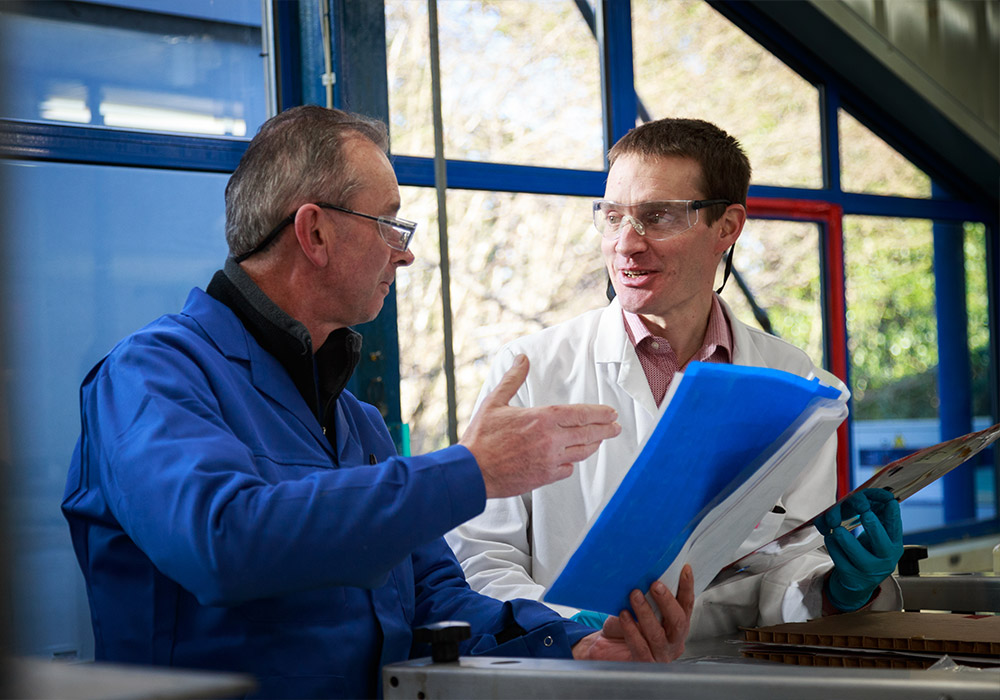
The most successful prototype builds happen when engineers collaborate with their PCB fabricator before the design is finalized.
An experienced prototype manufacturer can help engineers:
- Select realistic trace widths and spacing
- Define manufacturable via structures
- Confirm stackup architecture and impedance targets
- Identify potential fabrication risks early
This early feedback often prevents costly redesigns and schedule delays.
A Pre-Release Checklist for Engineers
Before releasing Gerber files for fabrication, engineers should review a few key questions:
- Are trace widths and spacing within proven fabrication limits?
- Are via aspect ratios realistic for the board thickness?
- Has the stackup been confirmed with the fabricator?
- Are impedance requirements aligned with real material tolerances?
- Has a DFM review been performed?
Prototype success is rarely accidental. It comes from combining strong engineering design with practical manufacturing insight.
By working closely with an experienced prototype fabricator such as Precision PCB, engineers can dramatically improve the chances that their first build works exactly as intended-saving time, reducing cost, and accelerating product development.
About Precision PCB
Precision PCB is one of the few true Total Concept providers in the electronics manufacturing industry, delivering both printed circuit board fabrication and full PCBA assembly services under one roof. By offering PCB manufacturing and assembly with a single purchase order, Precision PCB simplifies the supply chain and accelerates product development for engineers and OEMs. Their integrated approach reduces coordination challenges, shortens lead times, and ensures design, fabrication, and assembly work together seamlessly. From prototype to production, Precision PCB provides a complete, end-to-end electronics manufacturing solution that helps customers move from concept to finished product faster and more efficiently.
For more information go to www.precision4pcb.com or call the president Jay Rupani at 847-439-5447 and he’ll be happy to help you out.
Ensure Your First Prototype Works-Not Fails
Before you release your next design, get expert eyes on your layout, stackup, and manufacturability. A quick DFM and engineering review can eliminate costly re-spins, reduce delays, and improve first-pass success.
No obligation. Fast turnaround.
FAQs (Frequently Asked Questions)
Why do PCB prototypes fail the first time?
What are the most common DFM issues in PCB prototypes?
The most common DFM issues include:
- Trace widths and spacing below fabrication limits
- High via aspect ratios
Insufficient annular ring size - Copper imbalance affecting plating
These issues may pass in CAD but fail during actual manufacturing.
How can engineers prevent PCB prototype failures?
Engineers can prevent failures by:
- Conducting a DFM review before fabrication
- Validating stackup with the manufacturer
- Designing within proven fabrication limits
- Collaborating early with PCB fabricators
This ensures the design aligns with real manufacturing capabilities.
What is the role of stackup in PCB prototype success?
PCB stackup defines layer structure, dielectric thickness, and copper distribution. Small variations in stackup can affect impedance and signal integrity, especially in high-speed designs, making it critical for first-pass success.
What is a DFM review in PCB manufacturing?
Why is early collaboration with PCB manufacturers important?
Where can I get expert PCB prototype support in the USA?
Engineers and OEMs in the United States can work with experienced providers like Precision PCB, offering end-to-end PCB fabrication and assembly services to ensure reliable prototype performance and faster turnaround.