- January 12, 2026
- PCB Blog
Conformal Coating vs. Potting: Protecting Your PCB from Environmental Damage
A Guide to Increasing PCB Lifespan with Protective Coatings
Printed Circuit Boards (PCBs) are at the heart of modern electronic devices – controlling functionality in environments ranging from controlled indoor settings to harsh outdoor conditions. Whether you’re designing industrial controllers, automotive electronics, or consumer gadgets, protecting your PCB from environmental damage can dramatically extend product lifespan and reduce failure rates.
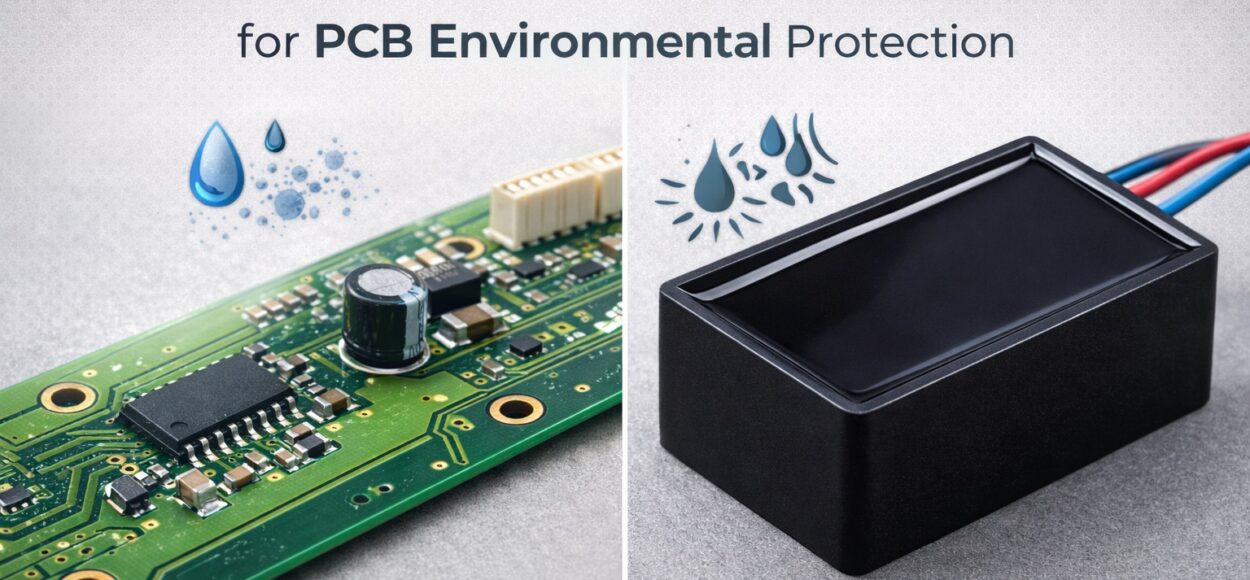
Two of the most commonly used protective solutions for PCBs are conformal coatings and potting (encapsulation). While both serve to shield PCBs from moisture, dust, chemicals, vibration and temperature stress, they differ significantly in application, performance, maintenance, and cost.
This guide will help you understand:
- What conformal coating and potting are
- How they differ
- When to use each
- Pros, cons, and best practices
- Real-world application examples
- FAQs to clear common doubts
What Is Conformal Coating?
Conformal coating is a thin polymeric film applied directly over the assembled PCB to protect it from environmental stressors.
Key Characteristics
- Thin protective layer (typically 25–250 microns)
- Flexible and lightweight
- Maintains visibility of components and test points
- Applied via spraying, dipping, or selective coating
Common Materials
- Acrylics (easy to apply/remove)
- Polyurethanes (excellent moisture resistance)
- Silicone (high thermal stability)
- Epoxy (strong chemical resistance)
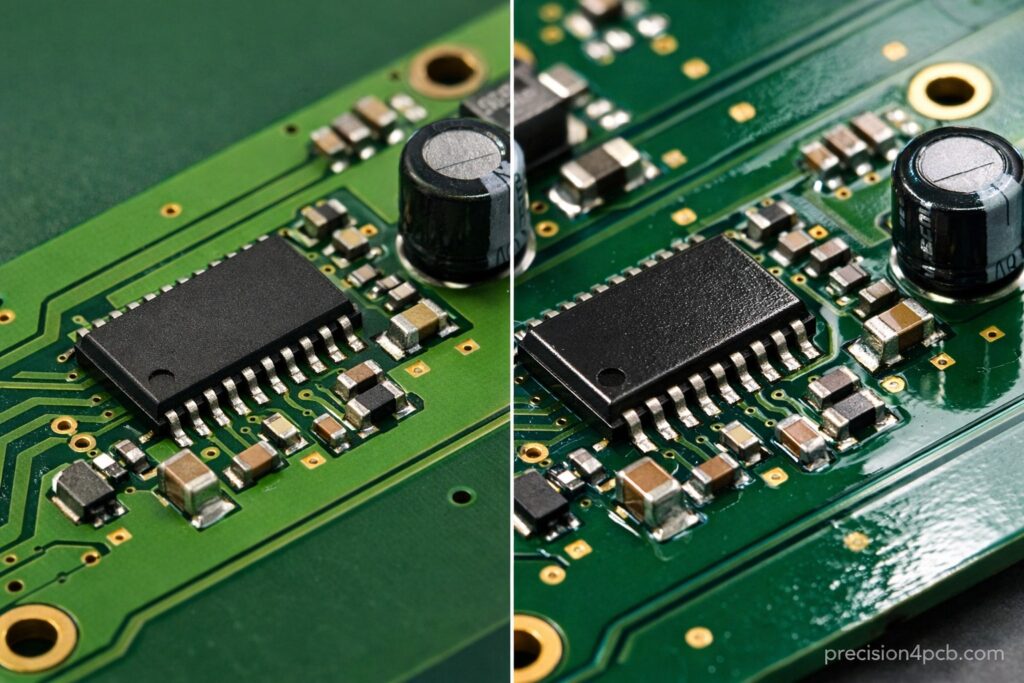
Ideal For: Electronics requiring moderate protection with the ability to rework and test after application.
What Is Potting (Encapsulation)?
Potting involves filling the entire PCB or electronics module with a protective compound to fully encapsulate the components.
Key Characteristics
- Creates a thick protective barrier
- Excellent shock, vibration, and moisture resistance
- Makes rework or component access difficult
- Often used in rugged or safety-critical electronics
Common Potting Materials
- Epoxy resins (high mechanical strength)
- Polyurethane potting compounds (good flexibility)
- Silicone potting compounds (thermal stability)
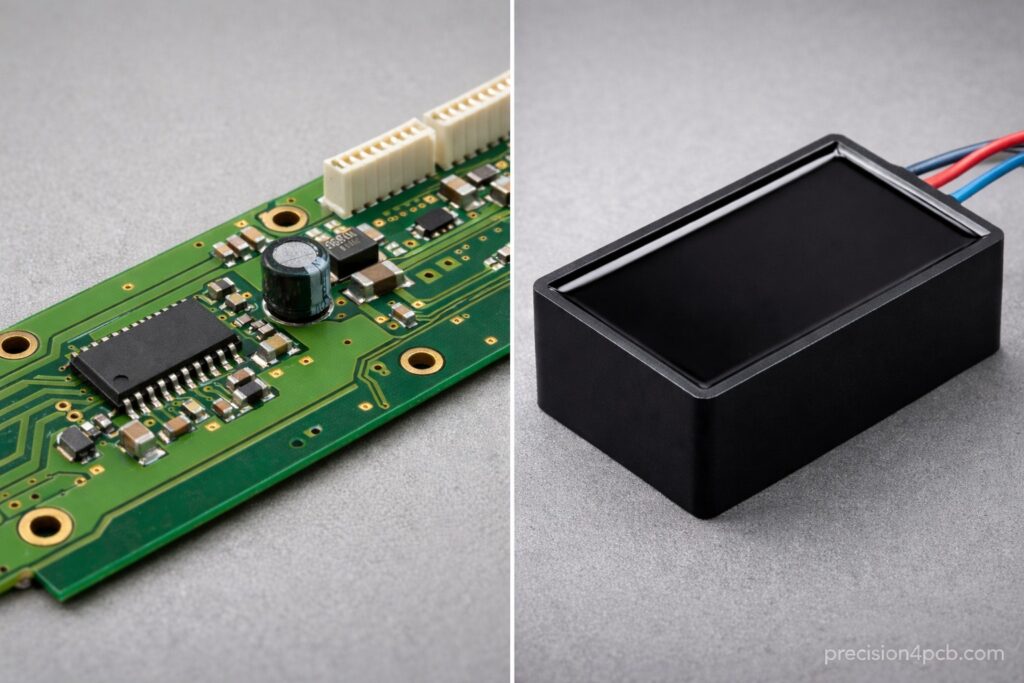
Ideal For: High-risk environments where maximum mechanical and environmental protection outweighs need for serviceability.
Conformal Coating vs Potting: Key Differences
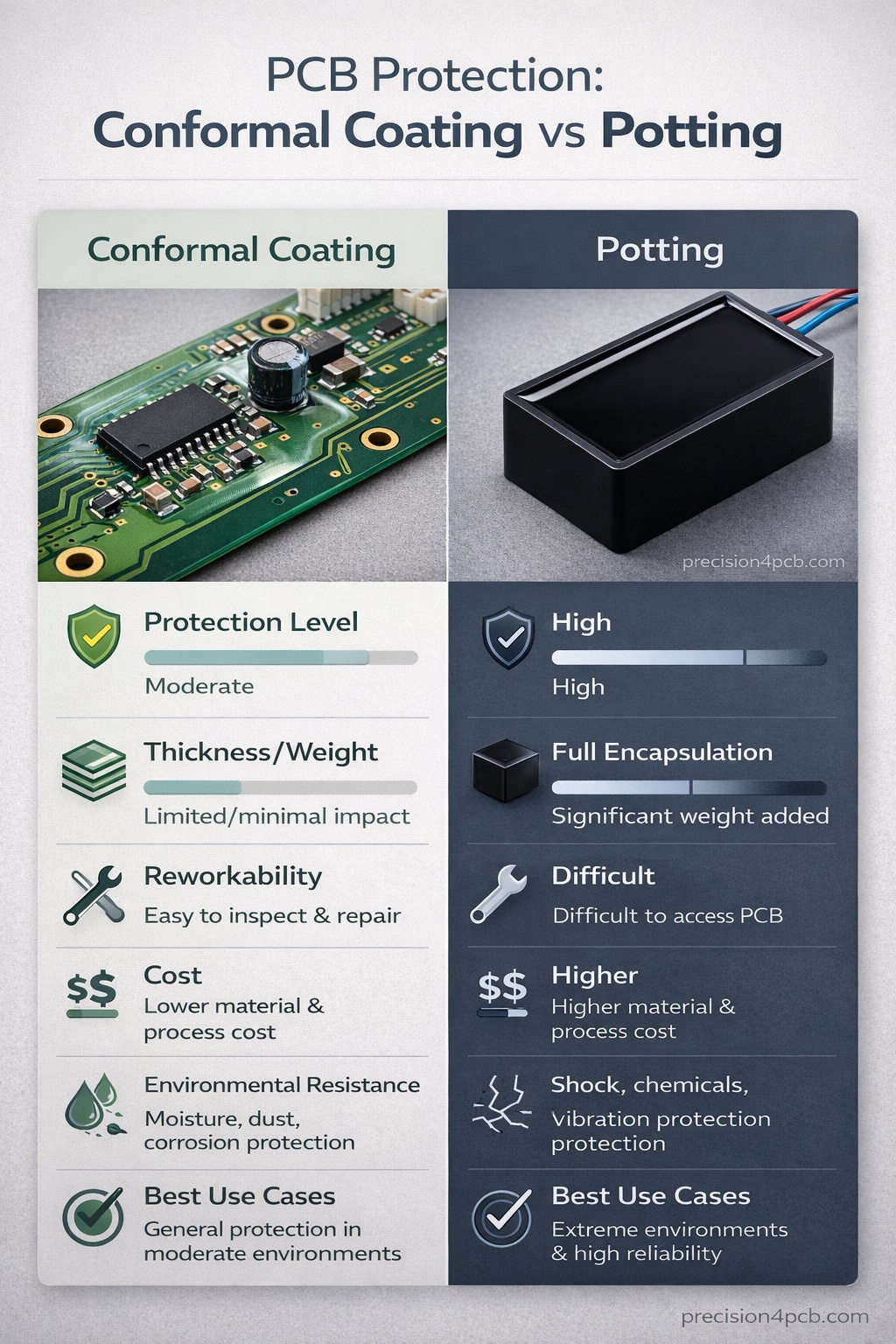
| Attribute | Conformal Coating | Potting (Encapsulation) |
|---|---|---|
| Protection Level | Moderate | High |
| Reworkability | High | Low/None |
| Weight | Low | Higher |
| Cost | Lower | Higher |
| Application Complexity | Medium | Medium-High |
| Thermal Dissipation | Better | Can be Poor |
| Suitable for High Vibration | Moderate | Excellent |
When to Use Conformal Coating
- Environments with moderate humidity, dust or temperature fluctuations
- Consumer electronics, telecom, instrumentation
- Designs needing testing, debugging and future rework
- Cost-sensitive projects demanding reliable but not extreme protection
Example Scenario: A control board in a consumer smart appliance exposed to occasional kitchen humidity.
When to Use Potting
- Harsh outdoors, marine, automotive, or aerospace electronics
- High vibration or mechanical shock exposure
- Long lifecycle products where maintenance access is minimal
- Safety-critical systems requiring maximum protection
Example Scenario: An automotive ECU exposed to engine heat, vibration, and road contaminants.
Pros and Cons at a Glance
Conformal Coating
Pros
- Lightweight and cost-effective
- Allows rework and testing
- Good under moderate stress
Cons
- Less robust against severe mechanical stress
- May degrade over long-term UV or chemical exposure
Potting
Pros
- Superior mechanical and environmental protection
- Excellent moisture and shock resistance
Cons
- Increases weight and cost
- Difficult/impossible to rework
Best Practices for PCB Protection
- Define Environmental Requirements Early: Use standards like IP ratings or IEC 60068 for guidance.
- Select Material Based on Application Conditions: Match coating or potting material to expected temperature, humidity, and chemical exposure.
- Design for Protection: Consider conformal coating masks, spacing for coated areas, and potting fill volume when designing the PCB.
- Process Controls: Ensure clean boards prior to application; control cure times and thickness.
- Testing and Verification: Use adhesion and dielectric tests to validate protective layer performance.
FAQs (Frequently Asked Questions)
Can I rework a conformal coated PCB?
Yes. Most conformal coatings can be carefully removed and reapplied for testing or part replacement.
Does potting affect heat dissipation?
Potting can trap heat; material selection and thermal design are crucial to prevent overheating.
What standards apply to conformal coating?
Standards such as IPC-CC-830 define performance criteria for conformal coatings.
Can I coat only parts of my PCB?
Selective coating is possible using masking techniques, commonly used to protect connectors or keep test points exposed.
How do I choose the right thickness?
Thickness depends on material and expected exposure; consult material datasheets and industry guidelines.
Conclusion
Choosing between conformal coating and potting is not a one-size-fits-all decision. It should be based on environmental conditions, product lifecycle expectations, serviceability requirements, and cost considerations. By understanding the strengths and limitations of each method, you can significantly enhance your PCB’s longevity and performance in its intended application.
For consultation on protective options tailored to your PCB design, contact Precision4PCB’s engineering team.