A Complete Guide for Modern Electronics Manufacturers
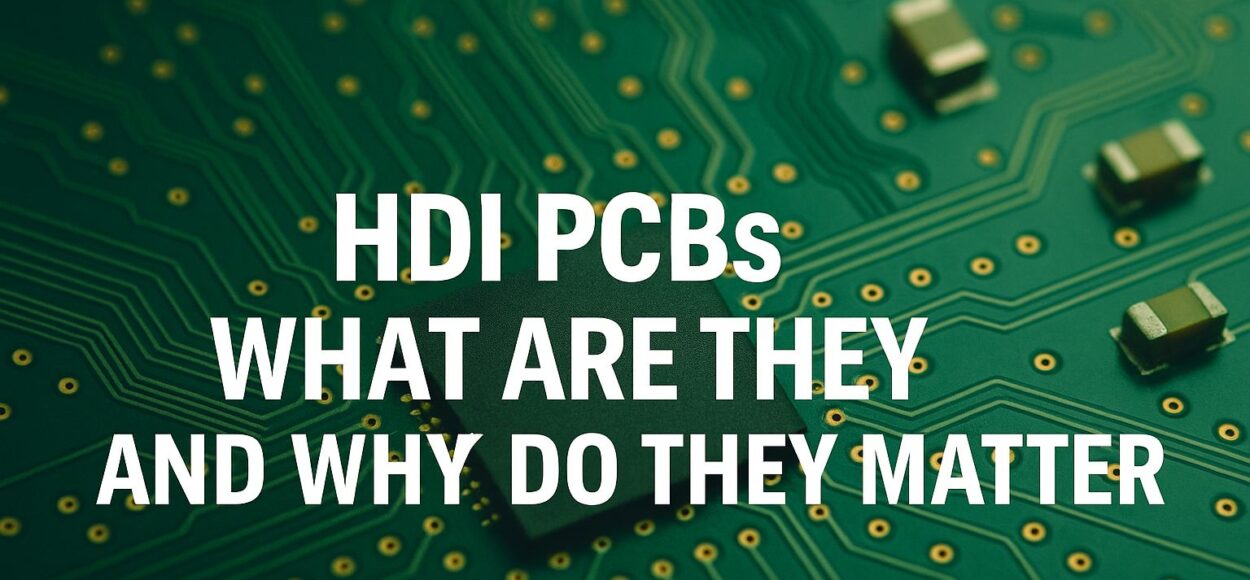
In today’s world of compact, high-performance electronics, traditional PCB designs often fall short. Devices are shrinking, components are becoming denser, and performance expectations are higher than ever. This is where HDI PCBs (High-Density Interconnect PCBs) have become a game-changer.
Whether used in smartphones, medical devices, military equipment, or high-speed communication systems, HDI PCBs are now the backbone of modern electronic engineering.
This guide breaks down what HDI PCBs are, how they work, why they matter, and how they benefit high-precision manufacturing.
What Is an HDI PCB?
HDI stands for High-Density Interconnect – a PCB technology that uses:
- Higher wiring density
- Microvias
- Fine traces and spaces
- Higher layer counts in smaller form factors
- Advanced layer stacking techniques
An HDI PCB packs more functionality into a smaller area by optimizing interconnections and enabling tighter component placement.
Compared to traditional PCBs, HDI boards use:
- Microvias (typically <150 microns)
- Laser-drilled vias
- Blind & buried vias
- Via-in-pad technology
- Stacked and staggered via structures
These features make HDI indispensable when designing small, fast, and power-efficient devices.
Why HDI PCBs Matter in Modern Electronics
1. Miniaturization – Smaller, Lighter Devices
HDI enables significant size reduction without compromising performance.
Modern devices like smartphones, tablets, wearables, and IoT hardware rely heavily on HDI because of limited space.
2. Higher Signal Integrity
HDI PCBs reduce:
- Signal loss
- Crosstalk
- Electromagnetic interference (EMI)
This is critical for high-frequency, high-speed digital applications like:
- 5G modules
- RF communication systems
- High-speed DDR memory
- Processor-dense systems
3. Better Electrical Performance
Microvias enable:
- Shorter signal paths
- Reduced inductance
- Lower power consumption
- Faster routing between layers
This results in improved overall PCB performance.
4. Increased Component Density
With fine-pitch components such as:
- BGA (Ball Grid Array)
- CSP (Chip Scale Package)
- QFN
- Microprocessors
HDI PCBs provide efficient breakout routing while maintaining system stability.
5. Improved Reliability
Laser-drilled microvias have:
- Higher aspect ratio stability
- Lower risk of via cracking
- Greater fatigue resistance
This makes HDI ideal for mission-critical applications including:
- Medical implantables
- Aerospace & defense electronics
- Automotive ADAS systems
Common HDI PCB Structures
1. 1+N+1 HDI Stackup
- One microvia layer on each side of the core
- Most widely used structure
Ideal for smartphones and consumer electronics.
2. 2+N+2 HDI Stackup
- Two microvia layers per side
Used for more complex high-density components.
3. Stacked & Staggered Microvias
- Stacked microvias for vertical alignment
- Staggered for improved mechanical durability
4. Via-in-Pad (VIPPO) Technology
- Microvias drilled directly into component pads
Perfect for BGA breakout and high-speed routing.
Industries That Depend on HDI PCBs
HDI technology is used across industries that demand speed, precision, and compact form factors.
Consumer Electronics
- Smartphones
- Tablets
- Wearables
- Laptops
Telecommunications
- 5G modules
- Routers & switches
- RF devices
Medical Devices
- Implants
- Diagnostic equipment
- Portable medical electronics
Automotive Electronics
- ADAS
- Infotainment
- EV battery management systems
Aerospace & Defense
- Radar systems
- Mission-critical controllers
- Satellite communication electronics
HDI vs. Standard PCBs: Key Differences
| Feature | Standard PCB | HDI PCB |
|---|---|---|
| Trace Width | Larger | Ultra-fine |
| Via Type | Through-holes | Microvias / blind / buried |
| Density | Low to medium | Very high |
| Size | Larger | Smaller & compact |
| Signal Integrity | Moderate | High |
| Cost | Lower | Higher (but cost-effective for modern applications) |
Frequently Asked Questions (FAQ)
HDI uses microvias, fine traces, and advanced layer stacking to achieve high-density component placement and superior signal performance.
Yes, HDI fabrication costs more due to laser drilling and advanced material requirements – but they significantly reduce overall system cost by saving space and enhancing performance.
HDI PCBs are used in smartphones, automotive ADAS, medical devices, aerospace electronics, telecom hardware, and compact IoT devices.
Choose HDI when your design requires:
- Smaller mechanical footprint
- High-speed / high-frequency routing
- High pin-count BGA breakout
- Improved reliability and signal integrity
Yes – Precision4PCB offers full HDI fabrication including microvias, blind/buried vias, stacked structures, and via-in-pad plating for advanced electronics.
Ready to Build High-Density, High-Performance HDI PCBs?