- November 14, 2025
- PCB Assembly, PCB Blog
Understanding IPC-A-610 – The Standard for PCB Assembly Quality
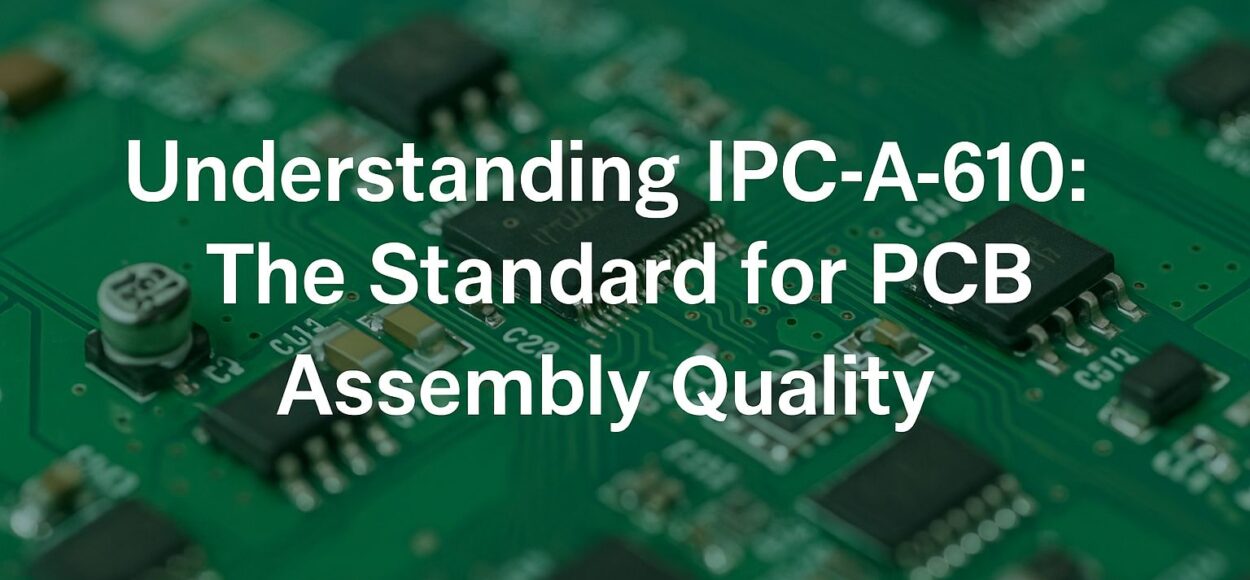
Quality and reliability in PCB assembly are not optional – they are essential, especially when producing electronics for demanding applications. That’s where IPC-A-610 comes in: a globally recognized standard that defines the acceptability criteria for assembled printed circuit boards (PCBA).
In this post, we explore what IPC-A-610 means, why it’s important, how it’s applied, and what it means for a manufacturer like Precision4PCB. We’ll also look at how this standard interacts with other industry norms, common challenges, and best practices.
What is IPC-A-610?
- IPC-A-610 stands for “Acceptability of Electronic Assemblies” – a standard published by IPC (formerly Institute of Printed Circuits).
- It provides visual inspection criteria and workmanship standards for electronic assemblies, including solder joints, component placement, cleanliness, mechanical assembly, marking/labeling, and overall board quality.
- The guide is used worldwide by electronics manufacturers, OEMs, contract manufacturers (EMS), and quality inspectors to ensure that final PCBs meet agreed quality standards before shipping.
In short: while industry standards for bare-board fabrication (like IPC-A-600, IPC-6012, etc.) cover how the raw PCB is made, IPC-A-610 evaluates the assembled board – components + solder + final touches.
Why IPC-A-610 Matters – For Manufacturers and Clients
- Consistency & Quality Assurance: It standardizes what counts as “acceptable quality,” reducing ambiguity and ensuring consistent inspection across batches.
- Reliability & Customer Trust: Adherence demonstrates commitment to reliable, professional assembly – especially important for demanding or high-reliability applications (industrial, automotive, medical, etc.).
- Global Standardization: As a globally recognized standard, IPC-A-610 helps manufacturers supply to international clients who demand recognized quality norms.
- Risk Reduction: By catching assembly defects (poor solder joints, misaligned components, cleanliness issues, etc.) early, it reduces field failures, warranty claims, and rework.
For a PCB contract manufacturer like Precision4PCB – ensuring IPC-A-610 compliance can significantly strengthen value proposition for quality-conscious clients and international customers.
Structure of IPC-A-610: Classes and What They Mean
IPC-A-610 defines three “Classes” of acceptability levels based on the intended application and reliability requirements of the end product.
| Class | Focus / Typical Use Cases | Key Characteristics |
|---|---|---|
| Class 1 | General electronics - where cost and basic functionality matter more than longevity | Least strict acceptance criteria; may accept minor cosmetic imperfections as long as function works. |
| Class 2 | Dedicated service electronics - typical consumer or industrial devices requiring reasonable reliability and lifetime | Balanced criteria: good workmanship, solder joints and placement acceptable for medium-term reliability. Widely used. |
| Class 3 | High-reliability, mission-critical devices - aerospace, medical, defense, high-end industrial, automotive safety etc. | Strictest standards: highest workmanship quality, tightest solder/joint/component criteria, minimal tolerance for cosmetic or minor defects. |
Note: The choice of class depends on the end-use – a cost-focused toy might qualify under Class 1, while a medical device PCB would typically need Class 3 compliance.
What Does IPC-A-610 Cover – Key Inspection Criteria & Acceptance Factors
IPC-A-610 addresses a wide range of assembly-quality aspects:
- Solder joints (SMT and through-hole): shape, fillet quality, wetting, proper solder volume, absence of defects like bridging, voids, tombstoning, de-wetting, cold joints.
- Component placement and orientation: correct alignment, pad coverage, lead insertion depth (for through-hole), consistent placement of SMT components.
- Mechanical assembly (hardware, heatsinks, connectors, wiring): proper mounting, stress-free leads, secure mechanical connections for reliability.
- Marking & labeling: legible, permanent marks (part IDs, lot codes, orientation markings, safety labels), properly placed for traceability.
- Cleanliness and workmanship: no flux residues, no contamination, no unintended damage to board or components, proper coating/conformal coating if used, no physical defects like scratches or board delamination.
- Overall assembly quality and integrity: ensuring the final assembly meets the functional, mechanical and reliability expectations for its class.
How IPC-A-610 Relates to Other IPC Standards
IPC-A-610 is part of a broader family of standards by IPC. For example:
- IPC-A-600 – covers acceptability of bare PCBs (before assembly).
- IPC-6012 – defines performance and qualification requirements for rigid PCBs (electrical, mechanical, environmental).
- IPC-J-STD-001 – defines soldering materials and process requirements for soldered assemblies (used in conjunction with IPC-A-610).
Together, these standards help ensure that a PCB – from raw material to final assembly – meets consistent, recognized quality benchmarks.
Challenges & Common Pitfalls in IPC-A-610 Compliance (And How to Avoid Them)
Even with a standard like IPC-A-610, real-world assembly can face challenges. Here are common pitfalls – and recommended best practices to avoid them:
- Inconsistent solder joints (poor wetting, cold joints, voids) – avoid by using correct soldering processes (temperature, reflow profile, solder paste), proper solder alloys and fluxes.
- Misaligned or improperly placed components (esp. SMT / fine-pitch) – ensure precise pick-and-place machines, correct stencil & solder paste printing, good process controls.
- Component damage or board damage during handling or rework – enforce ESD protection, careful handling, proper rework procedures, use of trained personnel.
- Poor cleanliness / flux residue / contamination – ensure proper cleaning and drying, use appropriate conformal coatings or protective finishes when required.
- Inadequate inspection or lack of documentation – implement inspection checklists, record keeping, QA reports, batch traceability.
By following best practices and internal QA procedures, a manufacturer can consistently meet IPC-A-610 Class 2 or Class 3 standards depending on customer requirements.
Real-World Relevance: Why Precision4PCB Should Adopt / Publicize IPC-A-610 Compliance
- Competitive edge: Offering IPC-A-610–compliant PCB assemblies positions Precision4PCB as a high-standard, professional manufacturer – attractive to clients needing reliability.
- Quality & reliability assurance: Especially for clients in industrial, automotive, medical, or export-oriented products, IPC compliance ensures their products meet globally recognized quality benchmarks.
- Transparency & trust: Being able to say “assembled to IPC-A-610 Class 2/3 standard” helps build trust with clients, especially those unfamiliar with internal QC processes.
- Reduced rework & defects: Clear visual criteria and inspection reduces returns, warranty failures, and increases first-pass yields – saving cost & time.
- Easier auditing & certification: Using IPC standards simplifies internal audits and helps meet or support regulatory/quality certifications required by clients.
Frequently Asked Questions (FAQ)
No – it’s technically voluntary. However, it is the most widely accepted and globally recognized standard for PCBA acceptability. Using IPC-A-610 helps ensure consistency, quality, and trust.
IPC-A-600 deals with bare PCBs (before assembly), granting acceptability criteria for the physical board itself. IPC-A-610, by contrast, covers assembled electronic boards (PCBA) – focusing on soldering, component placement, assembly workmanship, cleanliness and final acceptability.
Class 1 is for general electronics where cost matters and reliability is less critical; Class 2 is for dedicated service electronics requiring reasonable reliability and quality; Class 3 is for high-reliability, mission-critical electronics (medical, aerospace, defense, etc.) that demand the highest workmanship and assembly quality.
Yes – there are certification courses under IPC (for example, Certified IPC Specialist, IPC Trainer etc.), which help personnel correctly interpret acceptance criteria and perform inspections.
No – IPC-A-610 defines acceptability of the final assembled product, not the process. The soldering process and materials are governed by standards like IPC-J-STD-001. IPC-A-610 and J-STD-001 are complementary.
Conclusion
Implementing and adhering to IPC-A-610 demonstrates a commitment to excellence, reliability, and professionalism in PCB assembly – not just for meeting internal QA goals but for delivering world-class products.