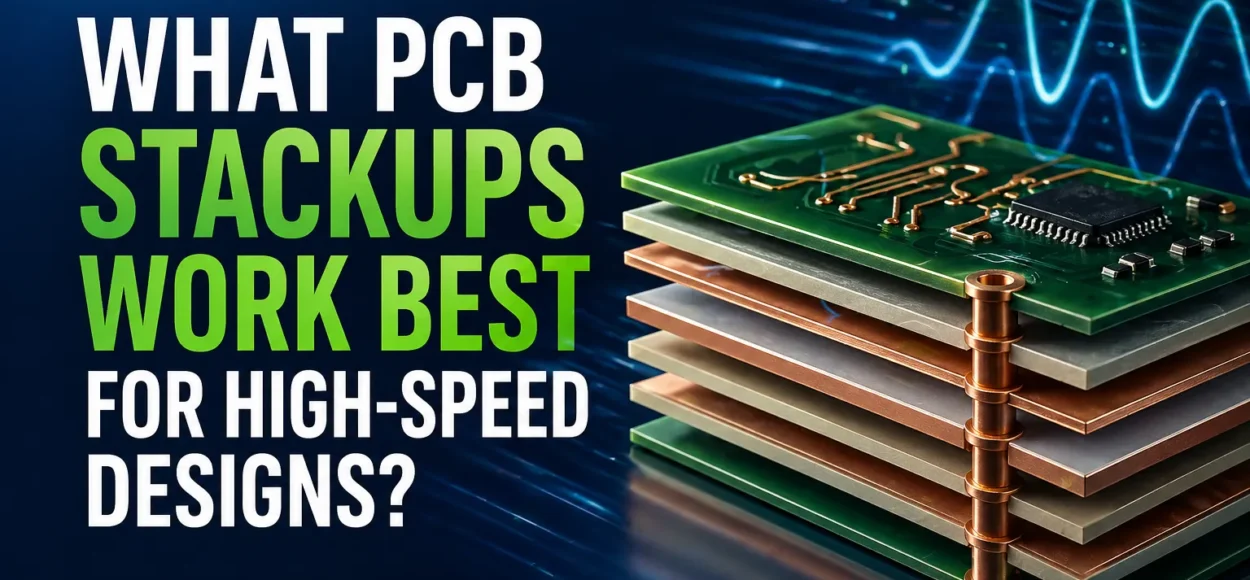
What PCB Stackups Work Best for High-Speed Designs?
High-speed digital circuits depend heavily on the PCB stackup structure, because the stackup determines impedance control, signal integrity, and electromagnetic performance.
Most high-speed designs perform best with symmetrical multilayer stackups that include dedicated reference planes. A common configuration is a 6-layer or 8-layer stackup with signal layers adjacent to solid ground planes. This arrangement creates controlled impedance traces and predictable return paths for high-frequency signals.
Designers often use stripline routing for critical signals because the traces are buried between reference planes, reducing noise and radiation. In some designs, microstrip routing on outer layers is acceptable when impedance is carefully controlled.
Material selection also matters. While standard FR-4 works for many designs, high-speed applications may benefit from low-loss laminates or high-Tg materials that reduce signal degradation at higher frequencies.
The most important step is collaborating with the PCB fabricator early. Fabricators can recommend stackups that meet impedance targets while remaining manufacturable and reliable.