

How to Optimize PCB Panelization for Cost and Efficiency
In PCB manufacturing, panelization is one of the most overlooked – yet most impactful – steps in optimizing production cost, speed, and material efficiency. By smartly arranging multiple PCBs onto a single manufacturing panel, manufacturers can minimize waste, reduce assembly time, and enhance yield consistency. At Precision4PCB, we emphasize design […]

Single vs. Multilayer PCBs: When to Use Each?
Printed Circuit Boards (PCBs) are the foundation of every electronic device, connecting and supporting components to ensure smooth electrical performance. But when designing a board, one of the most crucial early decisions is whether to use a single-layer PCB or a multilayer PCB. Both configurations have unique advantages and are […]
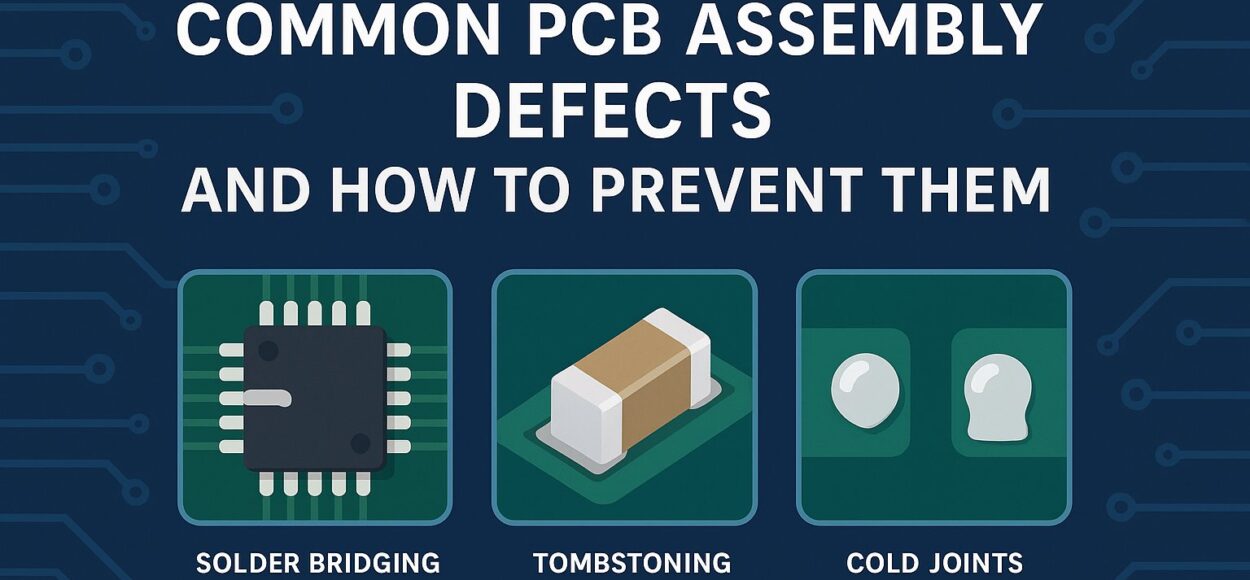
Common PCB Assembly Defects and How to Prevent Them
At Precision4PCB, quality and precision are at the core of every circuit we produce. PCB assembly is a highly intricate process that demands accuracy, consistency, and control. Even the smallest soldering error can result in major performance failures or costly rework. To maintain top-tier reliability, it’s essential to understand the […]
What’s New –
FOR IMMEDIATE RELEASE Precision PCB Acquires Assets of Microplace, Inc. Elgin, IL – 9/22/2025 – Precision Technologies Inc., doing business as Precision PCB, a One-Stop PCB Fabrication and Assembly services company with 27 years of experience providing Quality, Reliability and Excellence in customer service, has acquired the assets of Microplace, Inc. […]
The Impact of Material Selection on PCB Performance
FR4 vs. Rogers and Other High-Frequency Materials (What to Use – and When) If your board is dropping bits at high speed, missing impedance targets, or getting too warm for comfort, the culprit might not be the layout – it could be the laminate. PCB material choice drives signal integrity, […]

The Future of Flexible & Rigid-Flex PCBs
How flex circuits are reshaping wearables, aerospace, and medical applications. As products become smaller, lighter, and smarter, circuit boards are evolving too. Flexible and rigid-flex PCBs let designers bend, fold, and stack electronics in ways that flat, rigid boards simply can’t. That capability is powering a wave of innovation across […]

SMT vs. Through-Hole Assembly: Which is Best for Your PCB?
When it comes to PCB assembly, two methods dominate the industry: Surface Mount Technology (SMT) and Through-Hole Technology (THT). Both have their strengths, limitations, and ideal use cases. Choosing the right method can impact cost, durability, performance, and scalability of your electronic product. At Precision4PCB, we guide engineers and product […]

How to Reduce EMI in PCB Design
Practical Tips for Shielding, Grounding, and Stack-Up As electronic products get faster and more compact, electromagnetic interference (EMI) has become one of the toughest challenges for engineers. EMI can cause devices to behave unpredictably, fail compliance testing, or even disrupt nearby systems. If left unchecked, it often leads to costly […]

Best Practices for High-Speed PCB Design: How to Mitigate Signal Integrity Issues, Ensure Accurate Impedance Matching, and Optimize Trace Routing
As technology advances, the need for faster, smarter, and more efficient electronic products increases by the day. From next-generation automotive systems and high-end networking gear to consumer devices, high-speed printed circuit boards (PCBs) drive the innovation it all relies on. But PCB design for high-speed is no longer business as […]

PCB Design Pre-Planning Checklist
Before starting a new PCB design, careful planning is essential to ensure performance, manufacturability, and cost-effectiveness. Here’s a comprehensive list of key considerations: ✅ PCB Design Pre-Planning Checklist 🔧 1. Define Design Requirements Define PCB function and key features Specify I/O types (analog, digital, power) Determine performance targets (speed, […]